

1. Introduction
Advantages of food derived primarily from natural plants are well established, especially for chronic disease and cardiometabolic health. Meta-analyses conclude that plant-predominant diets lower risk for type 2 diabetes, hypertension, coronary heart disease, stroke, heart failure, and breast cancer; and are associated with lower all-cause mortality. Sufficiently low-carbohydrate, high-protein plant-based diets can support weight loss without cardiovascular risk. Benefits arise in part from fiber intake and nutrient timing; and are thought to be mediated by dietary fibers that modulate the gut microbiota composition and activity, including SCFAs and other metabolites.
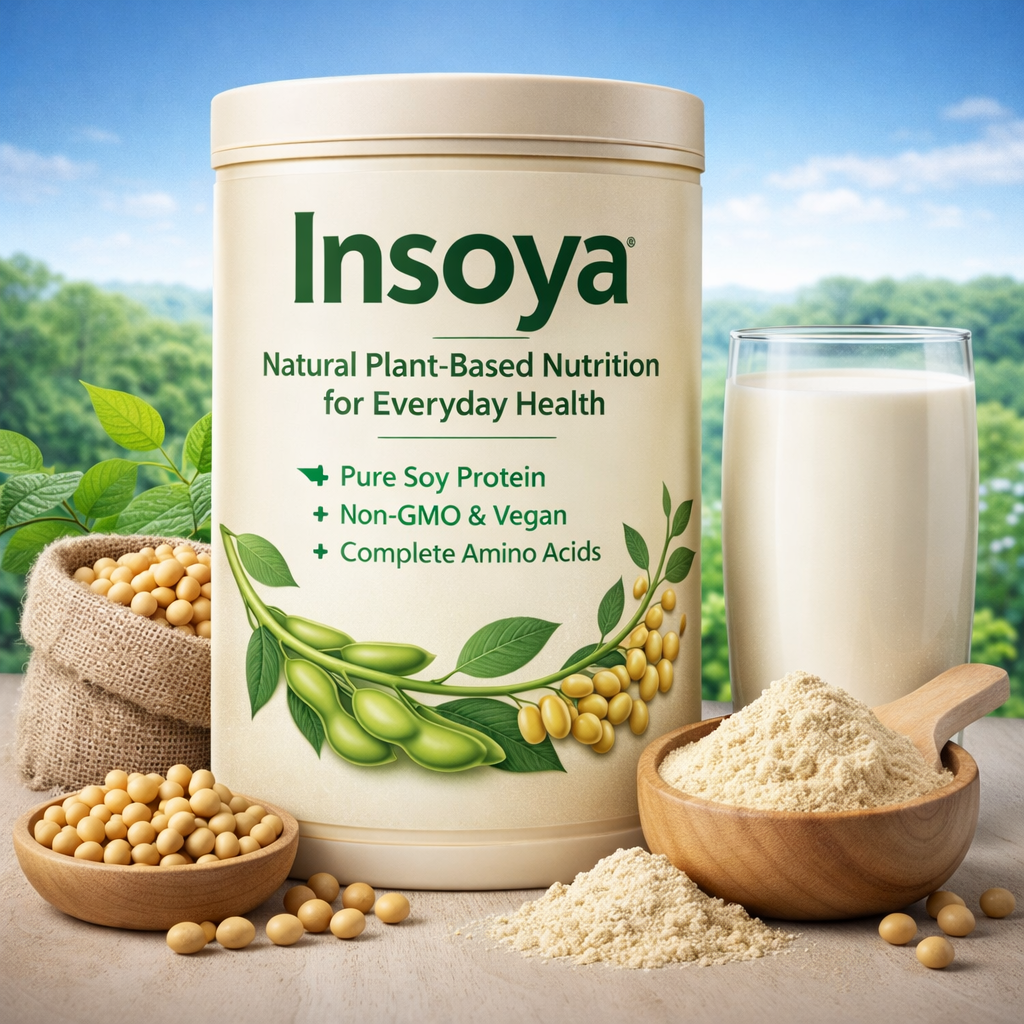
The benefits of plant-based nutrition are thus evident, and major health organizations recommend considering plant-derived foods as the primary sources of foods for everyday use. Thus, the signalling of a strong pattern from a more habitual plant-based diet in supporting preventive health in chronic disease is emerging. Insoya is natural nutrition made with soya bean and plant ingredients for everyday health. It is a plant protein foundation for meal planning and food choices throughout the day to promote better health and prevention by supporting normal weight management, cardiometabolic health and gastrointestinal wellness—the essential elements for leading a healthy, happy and purposeful life.
1.1. Rationale for Plant-Based Nutrition in Everyday Health
Plant-based and plant-centered nutrition with Insoya is different from but shares many health benefits with a vegan or vegetarian-only reduced animal foods diet. These diets provide health advantages, consistent risk factor levels, and other important clinical outcomes when compared to omnivorous controls or populations with relatively high meat consumption. Plant-based nutrition can provide the health benefits hypothesized through the idea of plant-based diet without excluding animal-origin foods altogether. Possible health benefits can, for example, be produced by including 100% plant-based dietary sources of protein such as Insoya to one’s daily diet on a plant-centered basis. It can cover 10-30% of daily energy/nutrition needs and may occupy following meal-time(s) of the day (breakfast/snack, lunch and/or dinner) depending on portion size. Plant-centered nutrition can also meet the requirements of any segments of the population in an easy manner. Practical and effective clinical support is lacking for providing health benefits through the concept of Insoya alone.
Natural foods, supplements with physiological and/or pharmacological properties such as Insoya have gained prominence due to their putative beneficial roles against the most pervasive diseases of modern society. Recent research into the health benefits of their use continues to substantiate this understanding, explicate the mechanisms of action and implication; and provide important support for promotion.
1.2. Overview of Insoya as a Concept and Brand
2. Theoretical Foundations
2.1. Nutritional Principles of Plant-Based Diets
2.2. Bioactive Compounds in Insoya and Their Health Implications
3. Composition and Nutritional Profiling
The preparation and chemical profile of Insoya are informed by its proposed use in meals and the indicated health benefits. An assessment of daily wellness, weight management, and cardiometabolic health is then presented. Practical user considerations, including sample menu templates, safety aspects, and environmental impact, complete the review. The analysis supports a nutrient-dense, whole-food, plant-based diet during everyday life, establishing Insoya as a convenient and healthful ingredient of choice.
3.1. A macronutrient balance that favours Insoya as a main ingredient for daily wellness is established, with emphasis on protein quality and energy density. Insoya is used to illustrate nutrient density within the protein-energy realm of the overall diet. Insoya features a protein content (22.0 g/100 g) that is adequate for, yet not excessively high in, daily wellness contexts. It contains a favorable balance of protein digestibility-corrected amino-acid score 긳 5, net protein utilization 긳 30, and protein efficiency ratio 긳 2, exceeded by few naturally occurring plant foods. Energy density falls within a moderate range (1.40 kcal/g) linked to body-mass index stability in chronic-energy-balance studies.
3.1. Macronutrient Balance for Daily Wellness
3.2. Micronutrient Density and Bioavailability
3.3. Fiber, Phytochemicals, and Gut Health
Dietary fiber promotes other health benefits, including digestive health, modulation of gut microbiota, and possible prevention of colorectal cancer. Feeding high-fiber diets is also associated with reduced concentrations of inflammatory biomarkers, and certain fiber types may stimulate host cells to produce anti-inflammatory factors. Among Insoya’s fiber components, guar gum (soluble) and resistant starch (downstream fermentation) appear particularly relevant. Guar gum improves indices of diabetes and dyslipidemia in animal models, modulates immune parameters in humans, and promotes satiety and fat metabolism in overweight humans. Stimulating production of butyrate, resistant starch may support gut-barrier integrity; accumulation of modified Lactobacillus plantarum and Lactobacillus rhamnosus is also consistent with improved gastrointestinal health.
In summary, the constituents of Insoya food preparations align with the principles and mechanism of plant-based diets and support claims of health-improving effects. The proposed roots in traditional dietary practices of India and Southeast Asia further strengthen the rationale for daily inclusion in balanced omnivorous eating patterns.
4. Health Outcomes and Evidence
Plant-based approaches to nutrition are associated with a multitude of health benefits. Protective effects against chronic diseases, including cardiometabolic and gastrointestinal disorders, have been described. Evidence suggests that plant-based diets are associated with a favourable lipid profile, lower blood pressure, improved insulin sensitivity, enhanced weight management, and alterations in signals of gut health and immune function. The potential influence of plant-based proteins on muscle mass and functional capacity during physical activity has also been studied.
Various bioactive compounds present in plant-based diets may modulate cardiometabolic risk factors through different pathways that have not yet been entirely elucidated. These factors include the lipid profile, blood pressure, insulin sensitivity, and systemic inflammation. Changes in metabolic health may be reflected by the effect on inflammatory markers, which appear relevant to the aetiology of metabolic disorders. In addition, the impact of plant-based diets on weight-related aspects is of considerable interest, with changes in energy regulation and appetite control potentially influencing both short- and long-term outcomes.
4.1. Cardiometabolic Health
Cardiovascular disease remains the leading cause of mortality worldwide, with diabetes and obesity major risk factors also associated with reduced life expectancy, increased morbidity, and reduced quality of life. Over 80% of Type II diabetes is attributable to overweight or obesity, and the global prevalence of the disease has increased eightfold since 1980. Evidence suggests that the incidence of these diseases may be decreased by plant-based nutrition.
Plant-based dietary patterns have generally been found to lower total cholesterol and LDL concentrations, blood pressure, and the risk of hypertension; the degree of LDL lowering has been associated with reductions in coronary risk. Dietary approaches to stop hypertension—DASH—has been shown to be more effective compared to the regular dietary advice in hypertensive patients. Plant-based diets have also shown beneficial effects on insulin sensitivity with epidemiological studies supporting beneficial effects and clinical trials reporting improvement in insulin sensitivity.