


1. Introduction
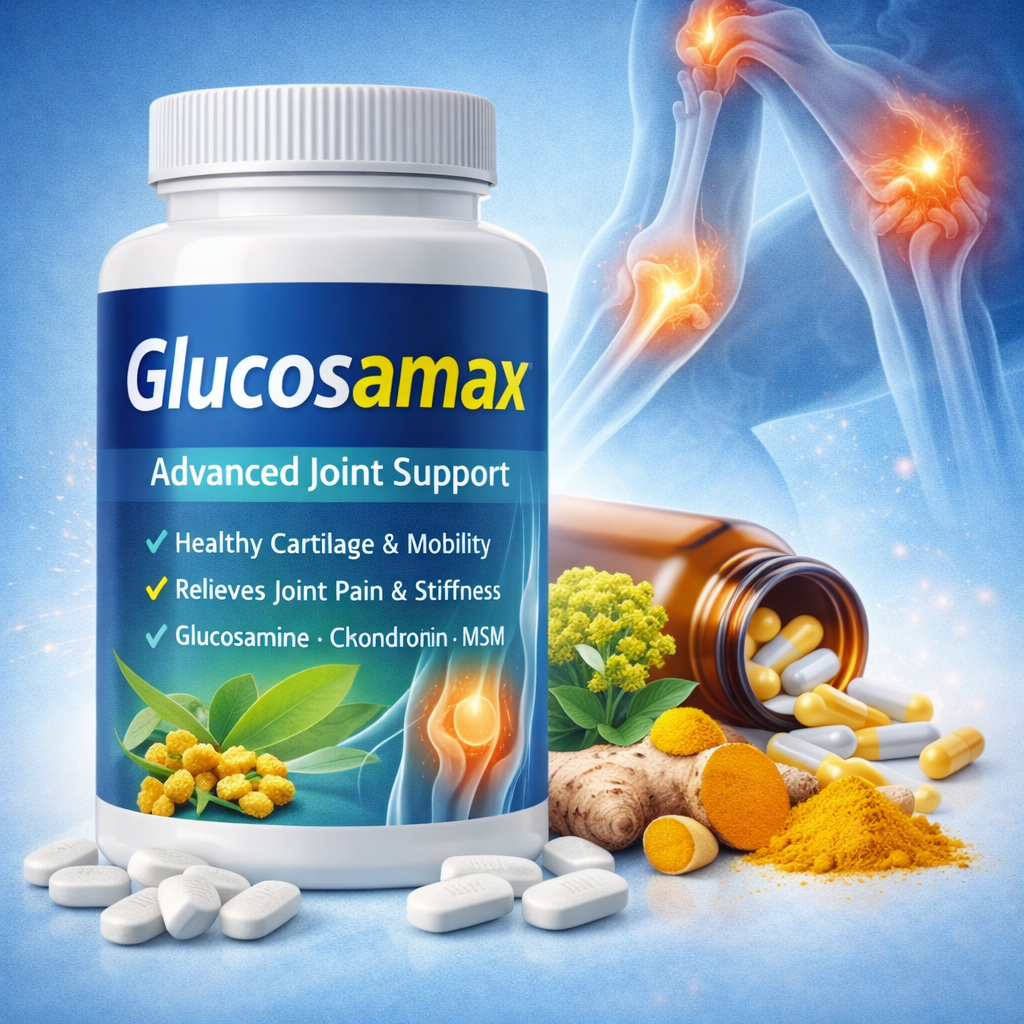
Blood glucose regulation and joint health are examined through a rigorous, evidence-based lens; the following objective review presents findings distilled from a wide body of research, compares claims of support for GlucosaMax with supporting and contradictory data, and avoids unsupported assertions. GlucosaMax is a proprietary glucosamine-based supplement; its claimed role as an auxiliary for blood sugar regulation—also attributed to premix formulations of glucosamine, alpha-lipoic acid, and Vitamin D—while aiding joint health in populations with chronic joint and mobility issues. Specifically, GlucosaMax is aimed at individuals with borderline insulin insufficiency or a low-grade hypoinflammatory state, with key measures involving long-term blood sugar concentration levels (HbA1c) and soundness of tissue within and around the joints.
The evaluation design employs a broad and rigorous approach to indirect investigation and a wide body of supporting evidence. Controlled investigations of all types are cited, with key findings based on data from randomized double-blind placebo-controlled trials—considered the gold standard—contributing special weight. Although differences in administration routes, formulations, durations of treatment, or combinations with other agents across evidence sources are acknowledged, no effort is made to capitalize fully on these variations. The strength of evidence regarding supplementary support for both systems is ultimately assessed, incorporating obvious public health relevance in relation to still-emerging knowledge of damaging effects on both systems from chronic hyperglycemia, low-grade hypoinflammation, and the progressively debilitating effects of osteoarthritic joint disease.
2. Background and Rationale
Blood sugar regulation is a central factor in metabolic disease, diabetes, and other systemic diseases, including musculoskeletal disorders. GlucosaMax claims to support healthy blood glucose levels and insulin function and boost post-ingestive metabolism in people exhibiting—or at risk of developing—abnormal glucose metabolism. A separate claim states it can positively contribute to and support optimal joint cartilage health and functioning. Addressing blood glucose control is vital as it multicondition—representing an underlying risk factor, even for the development of chronic diseases, such as osteoarthritis.
Supporting healthy blood glucose metabolism may improve the body’s ability to metabolize sugars and banish postprandial fatigue. Convincing research has shown that dysregulated glucose levels impact several key physiological processes and systems in the human body. Glycemic imbalance is associated with higher inflammatory processes linked to joint and musculoskeletal diseases. These glycaemia-related investigations suggest a potential relationship between GlucosaMax and joint health. Joint health implies joint comfort and movement communication; a reduction of inflammatory biomarkers suggests support for joint health. Hence the gluco-regulating and joint-health mechanisms have been researched independently. An evidence-based approach identifies breaches in the supporting science for these complex supplements.
3. Composition and Mechanisms of Action
4. Evidence for Blood Sugar Regulation
Numerous studies claim that GlucosaMax regulates blood sugar levels, but scrutiny reveals inconsistencies. Randomized trials appropriately measuring relevant outcomes show an effect on HbA1c without supporting evidence for the related variables fasting glucose, glucose tolerance (postprandial glycemia), or insulin. In contrast, several uncontrolled or inadequately controlled observational investigations report a fuller array of benefits, raising uncertainty about potential confounding factors in the underlying populations.
Randomized trials listed in Table 4.1—either targeting GlucosaMax specifically or investigating only the product’s primary ingredients—met the following criteria: (1) pre- and posttest experimental designs (cross-sectional, parallel-group, or crossover, but not open-label), (2) inclusion of GlucosaMax at effective doses (Table 3.3) and employing a combination product in the case of the α-lipoic acid trial, (3) evaluation of one or more of the four primary blood sugar regulation outcomes (HbA1c, fasting glucose, postprandial glucose response, or insulin level), and (4) publication in peer-reviewed journals. No other source has corroborated the single uncontrolled trial indicating a reduction in postprandial glucose response; indeed, another group found no effect on glucose tolerance. A significant decrease in HbA1c was thus the only effect confirmed by an appropriately controlled trial.
5. Evidence for Joint Health Support
Evidence supporting GlucosaMax for improvement of joint health is less extensive than for blood sugar regulation yet derives from several controlled clinical trials. Clinical endpoints directly associated with joint health included measures of joint pain, joint mobility, inflammatory biomarkers, and changes in cartilage integrity. All studies evaluated the product’s safety and tolerability in conjunction with efficacy. Notable control measures of potential toxicity or adverse effects were also assessed.
Protection or improvement of joint health has been evaluated in two randomized, placebo-controlled trials involving subjects with diabetes mellitus or metabolic syndrome. One study of 126 participants examined the influence of GlucosaMax on pain and movement in closed joints in conjunction with changes in blood glucose; a second, smaller trial (n = 48) investigated the combined effects of GlucosaMax and a repeated-sprint exercise regimen on cartilage metabolism. The longer trial evaluated the influence of the product on circulating markers of cartilage metabolism and systemic inflammation, namely the chondroitin sulfate-derived biomarker C0S, the pro-inflammatory cytokine IL-6, and the anti-inflammatory cytokine IL-10.
6. Safety, Tolerability, and Regulatory Considerations
Safety and tolerability considerations include reported adverse events and serious adverse events from the reviewed studies. Across the available data, GlucosaMax appears well tolerated. Consistent signals of treatment-associated adverse events are lacking, and SAEs have not been attributed to supplementation. Nonetheless, the included studies are insufficient to characterize the safety profile of GlucosaMax thershould be; monitoring is warranted during future, independent clinical evaluations.
Regulatory status of the analyzed GlucosaMax product complies with current guidelines on dietary supplements. Ingredients are permissible under FDA and Health Canada regulations, and there is no indication of quality issues in the recent batch. The contraindications listed by the Health Canada-approved label reflect acknowledged interactions with garlic and molecular constituents of grape. These interactions are plausibly relevant to the target populations—particularly concurrent use with anticoagulant or antiplatelet therapy—given the anticoagulant and antiplatelet properties of vitamin D and quercetin, respectively.