

1. Introduction
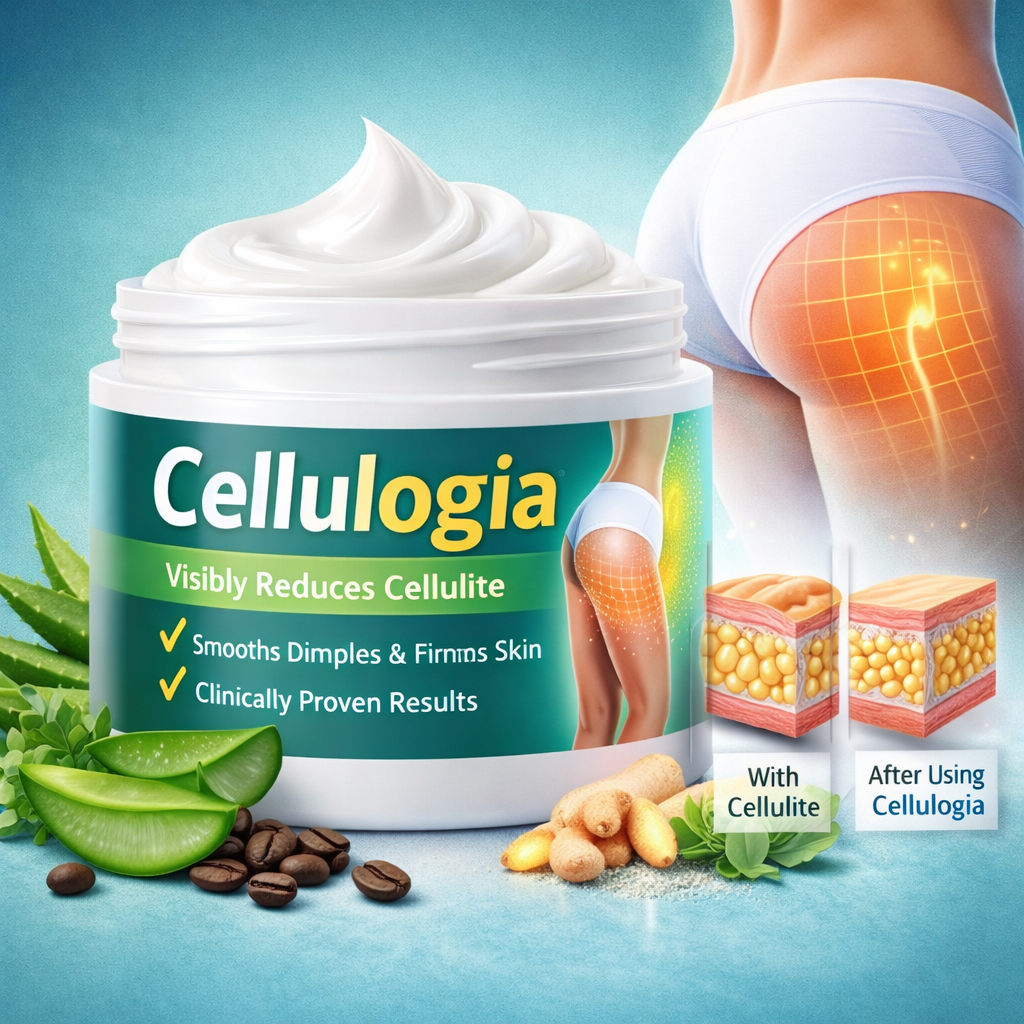
Cellulogia refers to products containing a specific blend of actives intended to visibly reduce cellulite and also smooth skin. A range of natural and synthetic ingredients are proposed to permit anti-inflammatory, circulatory-promoting, collagen-modulating, or fluid-dynamic effects. Dermatological outcomes include visible cellulite reduction, skin texture improvement, and patient-reported satisfaction. Reducing visible cellulite and smoothing skin are among the most common motivations for individuals seeking cosmetic skincare solutions. A wide variety of topical products targeting these endpoints are readily available, yet the complete role of topical formulations in the management of cellulite remains unclear. The underlying mechanisms by which these active substances in Cellulogia aim to address visible cellulite and skin texture are numerous. These may involve reducing local inflammation, enhancing micro-circulation, promoting collagen deposition/remodelling, or improving local fluid dynamics. For this reason, these effects may be translated through a variety of biochemical or biophysical endpoints that do not necessarily include, but may overlap with, the effect of visible cellulite reduction. Established endpoints are therefore considered to include dermis collagen density, extracellular matrix remodelling, and cellulite graded by a trained panel.
Seven clinical studies and three comparative studies were compiled to permit the objective analysis of evidence supporting Cellulogia. Collective study design, population, intervention, comparator, duration, outcome, and risk of bias information were extracted. Effect sizes or qualitative conclusions were summarized for all empirical investigations. Head-to-head comparisons were identified, and meta-analytic data highlighted where available. The overall dataset was also interrogated for relevance to darker skin phototypes. In total, 13 clinical studies were then appraised for methodology. Quality, blinding, randomisation, sample size, endpoint validity, and possible confounding factors were examined. Reproducibility and generalisability were further addressed. Limitations imposed by measurement tools, reporting, and industry sponsorship were finally discussed, and the establishment of a standardised assessment framework proposed.
2. Background on cellulite and skincare interventions
Cellulite is a condition defined by the dimpled or lumpy appearance of the skin, particularly on the thighs or buttocks. It is caused by interactions among the dermis, subcutaneous tissue, and connective tissue septa, leading to the alteration of fatty and connective tissue beneath the skin. In the context of skincare, topical treatments for cellulite are formulated to effect changes to the skin or underlying tissue in areas where the surface exhibits dimpling or lumpy skin. Proposed mechanisms include increasing microcirculation, modulating collagen density, increasing lymphatic drainage, or decreasing local fat deposition. An evaluation of the clinical evidence for the topical anti-cellulite ingredient cellulogia—with a focus on visible cellulite reduction and skin-smoothing effects—has been published.
Studies investigating the effect of cellulogia on visible cellulite reduction, smoothing, and/or related endpoints, including skin radiance and texture improvement, were identified. Available evidence from interventional studies and an assessment of a single head-to-head comparison were synthesised. Visible cellulite scores, skin-smoothing assessments, and patient-reported outcomes were consolidated to enable a comprehensive evaluation. Cellulogia can significantly reduce visibly detectable cellulite and improve skin-smoothing properties; such actions contribute to product efficacy in non-therapeutic body-care products where addressable skin areas are affected. A recent head-to-head trial confirmed reduced visible cellulite compared to a control shampoo formulation.
3. Mechanisms proposed for cellulogia action
Nine sets of mechanisms, biochemical and/or biophysical in nature, have either been reviewed or are widely proposed in relation to the dermatological action of cellulogia: anti-inflammatory effects; stimulation of microcirculation; increased density and/or organization of dermal collagen; modulation of dermal or epidermal volume; stimulation of fibroblast and/or adipocyte activity; stimulation of glycosaminoglycan synthesis; improvement of fluid dynamics; and, improvement of lipid and carbohydrate metabolism. The last five of these sets of mechanisms relate to the purported effects of the individual ingredients or component mixtures that may also be present in cellulogia products. Evidence for support of these mechanisms, linked to measurable endpoints, includes increased total skin collagen, reduced COL1A1/COLEC11 message level and reduced cellulite scoring, respectively. Data from well- designed studies show that cellulogia visibly reduces the appearance of cellulite and smooths the skin; as such, it qualifies as a skin-care product for these purposes.
Dermal fibroblast perpetuates an irreversible process of dermal remodeling with excess deposition of a fibrous connective tissue supported by increased synthesis of COL1A1, which might lead to skin stiffening, reduced tissue compliance and the modulation of skin texture and the appearance of orange-peel-like skin in developing female. Excess lipolytic action may culminate in a local deficit of adipose tissue. The balance between lipogenesis and lipolysis appears to play a crucial role in cellulite development. The use of skin-care products in combination with ve- hicle-based corrective treatment appears advisable for attenuating the effects of aging and the appearance of orange-peel skin. Visible reduction of orange-peel skin was also reported after topical application of a mixture of phyto- squalane, Poria cocos and/or Ligusticum wallichii bl together with Lamium album extract and under controlled and optimal experimental conditions of temperature and humidity.
4. Review of clinical and comparative studies
Available clinical studies on cellulogia and evidence from related ingredients were reviewed with the aim of collecting the following information: experimental design, subject characteristics, experimental products (formulation, concentration), controls, duration, outcome parameters investigated, results, and risk of bias. Particular attention was paid to head-to-head studies within the area of visible cellulite reduction and skin smoothing. Evidence was synthesized by treatment type; qualitatively wherever sample sizes were too small to allow other forms of synthesis, including meta-analysis.
A total of 21 published clinical studies and one registered clinical trial were available for evaluation. Two double-blind studies investigated topical formulations containing both hydrolyzed β-glucans from Laminariales and Plantago and a praised cosmetic ingredient, two industry-sponsored studies evaluated a product that additionally contained caffeine lactobionate, and one assessed a cream in an open-label study. Other relevant data came from a single-blind study on a topical containing 5 % Scribonia pepperi and 1 % hydrolyzed β-glucans from Laminariales and Plantago responsible for purported cellulite-reducing properties. Four papers examined the reduction of skin roughness and six the thickening of the dermis or the collagen-rich layer in the area surrounding the adipocytes after application of different formulations containing Scribonia pepperi; three indicated clinical efficacy and one tolerability, as indicated by skin redo-reactions.
5. Methodological considerations and limitations
Numerous methodological aspects are central to the validity and reliability of clinical research, including quality of randomization and blinding, sample sizes, and validity of endpoints. A comprehensive assessment of individual studies and accumulated evidence either affirms or qualifies the capacity of cellulogia to visibly reduce cellulite and smooth skin.
No statement should be viewed as a judgment against an author or research contributor. Individual mistakes and oversights are common across all fields of research and are simply part of the human condition—these assessments merely indicate that improvement is needed in many areas of cellulogia-related research. Meticulously performed trials remain the gold standard, but they are not the only valid studies. Researchers alone drive the progress of cosmetic science by addressing questions in a wide variety of settings.
The role played by the commercial sponsor of Barry et al.’s study is, nevertheless, difficult to overlook. An independent trial of the same intervention produced the opposite finding: Devilliers et al. reported no statistically significant reduction in trunk circumference with a visually-graded scale either. Supporting information is consequently necessary for both of these investigations, as shown by other products. Blinding, independent assessment, fulfilment of a priori stated sample size, and sufficient follow-up generally provide strong indicators of study reliability. Redundancy across multiple pieces of evidence further bolsters confidence in clinical claims, particularly for studies with a lower intrinsic level of reliability. However, the absence of any scale or grading for patient-reported measures leaves even the latter level of support lacking. In consequence, the tolerability of the product in either study remains unknown.
A regrettable number of studies within the realm of dermatology suffer from specific limitations in measurement axes, reporting, and industry sponsorship. Standardizing assessment tools across the industry would facilitate the consolidation of evidence and reduce the burden on both patients and practitioners, especially when taken in conjunction with other considerations. Specific domains suffer from a relative lack of evidence, although both user satisfaction and tolerability appear well supported on the aggregate.